
What You Must Disclose When Selling - Magical Success Realty

September 22, 20267 min read

Before most Chandler sellers list their home, they assume a quick walkthrough with their agent covers disclosure. It seems like enough, but incomplete disclosure can give a buyer grounds to raise concerns or renegotiate after inspection.

What you have to disclose when selling a house in Arizona goes well beyond a single checkbox form. Sellers who leave out known issues, even small ones, hand buyers leverage to cut the price before closing.

This article walks you through what Arizona law requires and how full disclosure protects your sale price instead of threatening it.

By the end, you will know what to gather, how to complete each disclosure step correctly, and when the process is complex enough to bring in a licensed professional.
img

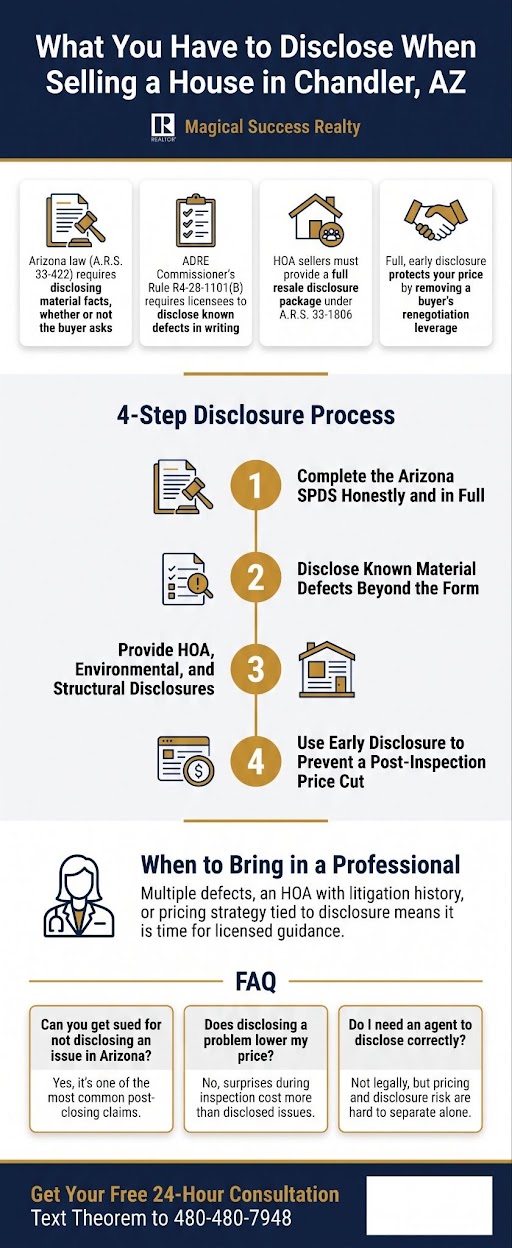
Arizona law requires disclosure of known material facts about your home, and providing that information early can help reduce surprises during the inspection process.

What You Need Before You Start

Before you figure out what you have to disclose when selling a house, gather the paperwork that will make each answer accurate instead of guessed.

Documents and Records to Collect First

  • Original purchase documents and any title reports

  • Repair invoices and warranty records for major systems

  • HOA documents, if the property sits inside a Chandler HOA community

  • Past inspection reports, including any items a previous buyer flagged

  • Notes on known defects, even ones you consider minor or already fixed

Arizona law requires you to disclose material facts about your property whether or not the buyer asks, under Arizona Revised Statutes Section 33-422. Disclosure in Arizona starts with paperwork, but it only works when every document matches what you actually know about the home.

Step-by-Step: How to Disclose Everything You Have to Disclose When Selling a House

What you have to disclose when selling a house in Arizona centers on the Seller Property Disclosure Statement, where you reveal every known material fact about the property, including past repairs, structural issues, water damage, and pest problems, regardless of whether the buyer asks.

Skipping an item does not remove your legal obligation. Buyers who discover an undisclosed issue during inspection commonly use it to renegotiate the price or walk away from the contract.

Step 1: Complete the Arizona SPDS Honestly and in Full

Complete every section of the Seller Property Disclosure Statement yourself, in your own words, instead of leaving fields blank or copying a template answer.

Answer each question about the roof, plumbing, electrical system, and pest history based on what you actually know.

The Arizona Department of Real Estate confirms under Commissioner's Rule R4-28-1101(B) that a licensee must disclose any known material defect in writing, so a vague SPDS answer works against you and your agent later.

Step 2: Disclose Known Material Defects Beyond the Form

List every defect you know about, even ones the SPDS does not ask about directly, since the form is a minimum standard, not a full shield. Common examples in Chandler homes include soil movement, aging HVAC units, and past roof leaks.

Providing these details upfront gives buyers a clearer picture of the property's condition and can reduce surprises during inspection.

Step 3: Provide HOA, Environmental, and Structural Disclosures

Request your HOA financial statements, rules, and any pending litigation documents if your Chandler property sits inside a community association.

Arizona requires associations to deliver this resale package under Arizona Revised Statutes Section 33-1806, including bylaws, current assessments, and pending lawsuits.

Disclose known environmental concerns such as soil remediation history, and note structural work like slab repairs. Confirm whether your home falls near a designated military airport or flight path, since Arizona requires this disclosure separately from the SPDS.

Step 4: Use Full, Early Disclosure to Prevent a Post-Inspection Price Cut

Most home-selling guides treat disclosure as a legal chore you finish and forget. Chandler sellers get better results when they treat full, early disclosure as a pricing strategy instead.

When a buyer's inspector uncovers an issue you already disclosed in writing, the buyer has already received that information before the inspection, which can reduce the likelihood of it being treated as a surprise.

When you wait and let inspection reveal a surprise, buyers treat it as new information and use it to demand a credit or price reduction, even on issues you knew about but assumed were minor.

Arizona Revised Statutes Section 33-422 makes clear that this obligation exists whether the buyer asks or not, so full disclosure upfront can reduce the risk of a buyer treating a known issue as new information.

When This Becomes a Job for a Professional

Once you know what you have to disclose when selling a house, the harder question is whether you can manage disclosure and pricing risk alone.

Signs the Disclosure and Pricing Stakes Are Beyond Safe DIY Scope

You are likely past handling this alone once you are juggling more than one known defect, an HOA with litigation history, or repairs disclosed alongside a specific price strategy.

A real estate license in Arizona is regulated under Arizona Revised Statutes Title 32, Chapter 20, which sets the standard a licensed agent must follow, a standard an unrepresented seller has no obligation to meet.

How Magical Success Realty Handles Seller Disclosure and Pricing Together

A licensed Arizona REALTOR is expected to walk you through every line of the SPDS, confirm which local disclosures apply to your specific Chandler neighborhood, and build your listing price around what the disclosure record actually supports, not just recent comparable sales.

Magical Success Realty applies this standard using an engineering-based approach to pricing, so your disclosure paperwork and asking price get built together, not handled as two separate tasks.

The Consumer Financial Protection Bureau explains that buyers receive the Closing Disclosure before closing, making it important to review final loan and closing terms carefully.

Homes sold with an agent's guidance closed at a meaningfully higher median price than owner-managed sales, according to the National Association of REALTORS.

Frequently Asked Questions

Here are quick answers to what you have to disclose when selling a house in Arizona, plus what happens if you skip a step.

Q1. What do you have to disclose when selling a house in Arizona?

Arizona law requires you to disclose every material fact you know about your property, including structural issues, past water damage, pest history, and any repairs, regardless of whether the buyer specifically asks.

You do this primarily through the Seller Property Disclosure Statement, plus any HOA, environmental, or airport-proximity disclosures that apply to your specific property.

Q2. Can you get sued for not disclosing something when selling a house in Arizona?

Yes. Failure to disclose a known material defect can create legal risk for sellers and agents, and Arizona law does not require the buyer to have asked about it directly. Writing down every known issue is the most reliable way to avoid this risk.

Q3. Does disclosing a problem lower my home's selling price in Chandler?

Disclosing a known issue does not automatically lower your price, since buyers can price around a documented problem in their initial offer. An undisclosed issue found during inspection can give buyers grounds to request a credit, price reduction, or other change to the agreement.

Q4. What happens if a buyer finds an undisclosed issue during inspection in Arizona?

The buyer typically brings the issue back to the negotiating table and asks for a price reduction, a repair credit, or more inspection time. In some cases, the buyer can cancel the contract entirely, restarting your selling timeline and adding carrying costs.

Q5. Do I need a real estate agent to complete seller disclosures in Chandler, AZ?

Arizona law does not require you to hire an agent to sell your home, but pairing disclosure with pricing strategy is where most owner-managed sales run into trouble. A REALTOR familiar with Chandler neighborhoods can help identify applicable disclosures and factor the property's condition and disclosed issues into the pricing strategy.

Your Next Step in Chandler, AZ

Now that you know what you have to disclose when selling a house, the last step is pricing it with that information already factored in.

Full, early disclosure protects more than your legal position; it protects the price you actually walk away with at closing. Chandler sellers who document every known issue before listing give buyers fewer reasons to renegotiate once inspection begins.

If you are getting ready to list and want your disclosure paperwork and pricing strategy handled together from day one, Magical Success Realty offers a 24-hour free consultation to walk through your specific property before you go live on the market.

Text the keyword "theorem" to 480-480-7948 to book your free consultation and get a clear answer on what to disclose and what your home is really worth.

Custom HTML/CSS/JavaScript


Back to Blog

What You Must Disclose When Selling - Magical Success Realty

September 22, 20267 min read

Before most Chandler sellers list their home, they assume a quick walkthrough with their agent covers disclosure. It seems like enough, but incomplete disclosure can give a buyer grounds to raise concerns or renegotiate after inspection.

What you have to disclose when selling a house in Arizona goes well beyond a single checkbox form. Sellers who leave out known issues, even small ones, hand buyers leverage to cut the price before closing.

This article walks you through what Arizona law requires and how full disclosure protects your sale price instead of threatening it.

By the end, you will know what to gather, how to complete each disclosure step correctly, and when the process is complex enough to bring in a licensed professional.

img

Arizona law requires disclosure of known material facts about your home, and providing that information early can help reduce surprises during the inspection process.

What You Need Before You Start

Before you figure out what you have to disclose when selling a house, gather the paperwork that will make each answer accurate instead of guessed.

Documents and Records to Collect First

  • Original purchase documents and any title reports

  • Repair invoices and warranty records for major systems

  • HOA documents, if the property sits inside a Chandler HOA community

  • Past inspection reports, including any items a previous buyer flagged

  • Notes on known defects, even ones you consider minor or already fixed

Arizona law requires you to disclose material facts about your property whether or not the buyer asks, under Arizona Revised Statutes Section 33-422. Disclosure in Arizona starts with paperwork, but it only works when every document matches what you actually know about the home.

Step-by-Step: How to Disclose Everything You Have to Disclose When Selling a House

What you have to disclose when selling a house in Arizona centers on the Seller Property Disclosure Statement, where you reveal every known material fact about the property, including past repairs, structural issues, water damage, and pest problems, regardless of whether the buyer asks.

Skipping an item does not remove your legal obligation. Buyers who discover an undisclosed issue during inspection commonly use it to renegotiate the price or walk away from the contract.

Step 1: Complete the Arizona SPDS Honestly and in Full

Complete every section of the Seller Property Disclosure Statement yourself, in your own words, instead of leaving fields blank or copying a template answer.

Answer each question about the roof, plumbing, electrical system, and pest history based on what you actually know.

The Arizona Department of Real Estate confirms under Commissioner's Rule R4-28-1101(B) that a licensee must disclose any known material defect in writing, so a vague SPDS answer works against you and your agent later.

Step 2: Disclose Known Material Defects Beyond the Form

List every defect you know about, even ones the SPDS does not ask about directly, since the form is a minimum standard, not a full shield. Common examples in Chandler homes include soil movement, aging HVAC units, and past roof leaks.

Providing these details upfront gives buyers a clearer picture of the property's condition and can reduce surprises during inspection.

Step 3: Provide HOA, Environmental, and Structural Disclosures

Request your HOA financial statements, rules, and any pending litigation documents if your Chandler property sits inside a community association.

Arizona requires associations to deliver this resale package under Arizona Revised Statutes Section 33-1806, including bylaws, current assessments, and pending lawsuits.

Disclose known environmental concerns such as soil remediation history, and note structural work like slab repairs. Confirm whether your home falls near a designated military airport or flight path, since Arizona requires this disclosure separately from the SPDS.

Step 4: Use Full, Early Disclosure to Prevent a Post-Inspection Price Cut

Most home-selling guides treat disclosure as a legal chore you finish and forget. Chandler sellers get better results when they treat full, early disclosure as a pricing strategy instead.

When a buyer's inspector uncovers an issue you already disclosed in writing, the buyer has already received that information before the inspection, which can reduce the likelihood of it being treated as a surprise.

When you wait and let inspection reveal a surprise, buyers treat it as new information and use it to demand a credit or price reduction, even on issues you knew about but assumed were minor.

Arizona Revised Statutes Section 33-422 makes clear that this obligation exists whether the buyer asks or not, so full disclosure upfront can reduce the risk of a buyer treating a known issue as new information.

When This Becomes a Job for a Professional

Once you know what you have to disclose when selling a house, the harder question is whether you can manage disclosure and pricing risk alone.

Signs the Disclosure and Pricing Stakes Are Beyond Safe DIY Scope

You are likely past handling this alone once you are juggling more than one known defect, an HOA with litigation history, or repairs disclosed alongside a specific price strategy.

A real estate license in Arizona is regulated under Arizona Revised Statutes Title 32, Chapter 20, which sets the standard a licensed agent must follow, a standard an unrepresented seller has no obligation to meet.

How Magical Success Realty Handles Seller Disclosure and Pricing Together

A licensed Arizona REALTOR is expected to walk you through every line of the SPDS, confirm which local disclosures apply to your specific Chandler neighborhood, and build your listing price around what the disclosure record actually supports, not just recent comparable sales.

Magical Success Realty applies this standard using an engineering-based approach to pricing, so your disclosure paperwork and asking price get built together, not handled as two separate tasks.

The Consumer Financial Protection Bureau explains that buyers receive the Closing Disclosure before closing, making it important to review final loan and closing terms carefully.

Homes sold with an agent's guidance closed at a meaningfully higher median price than owner-managed sales, according to the National Association of REALTORS.

Frequently Asked Questions

Here are quick answers to what you have to disclose when selling a house in Arizona, plus what happens if you skip a step.

Q1. What do you have to disclose when selling a house in Arizona?

Arizona law requires you to disclose every material fact you know about your property, including structural issues, past water damage, pest history, and any repairs, regardless of whether the buyer specifically asks.

You do this primarily through the Seller Property Disclosure Statement, plus any HOA, environmental, or airport-proximity disclosures that apply to your specific property.

Q2. Can you get sued for not disclosing something when selling a house in Arizona?

Yes. Failure to disclose a known material defect can create legal risk for sellers and agents, and Arizona law does not require the buyer to have asked about it directly. Writing down every known issue is the most reliable way to avoid this risk.

Q3. Does disclosing a problem lower my home's selling price in Chandler?

Disclosing a known issue does not automatically lower your price, since buyers can price around a documented problem in their initial offer. An undisclosed issue found during inspection can give buyers grounds to request a credit, price reduction, or other change to the agreement.

Q4. What happens if a buyer finds an undisclosed issue during inspection in Arizona?

The buyer typically brings the issue back to the negotiating table and asks for a price reduction, a repair credit, or more inspection time. In some cases, the buyer can cancel the contract entirely, restarting your selling timeline and adding carrying costs.

Q5. Do I need a real estate agent to complete seller disclosures in Chandler, AZ?

Arizona law does not require you to hire an agent to sell your home, but pairing disclosure with pricing strategy is where most owner-managed sales run into trouble. A REALTOR familiar with Chandler neighborhoods can help identify applicable disclosures and factor the property's condition and disclosed issues into the pricing strategy.

Your Next Step in Chandler, AZ

Now that you know what you have to disclose when selling a house, the last step is pricing it with that information already factored in.

Full, early disclosure protects more than your legal position; it protects the price you actually walk away with at closing. Chandler sellers who document every known issue before listing give buyers fewer reasons to renegotiate once inspection begins.

If you are getting ready to list and want your disclosure paperwork and pricing strategy handled together from day one, Magical Success Realty offers a 24-hour free consultation to walk through your specific property before you go live on the market.

Text the keyword "theorem" to 480-480-7948 to book your free consultation and get a clear answer on what to disclose and what your home is really worth.

Custom HTML/CSS/JavaScript


Back to Blog

Follow Long Le On Social

Quick Info

1971 W Chilton Dr, Chandler, AZ 85224, United States

480-480-7948

© Copyright Arizona 2026. All rights reserved.